THE MAKING BEHIND OUR FINDS
How It’s Made.
Follow two examples: a woven alpaca throw from Ecuador and a felt ornament from Nepal. Materials and methods vary by maker and item.
 Ecuador
From alpaca fleece to a woven throw
Loose alpaca fleece is prepared, spun into yarn, and woven into fabric. A throw is one example of what that fiber can become.
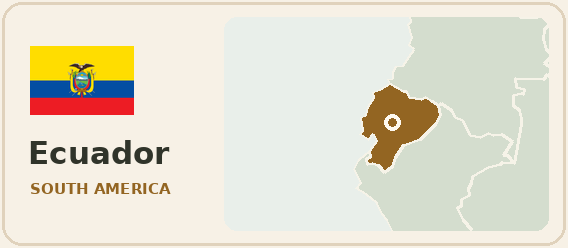 Country locator
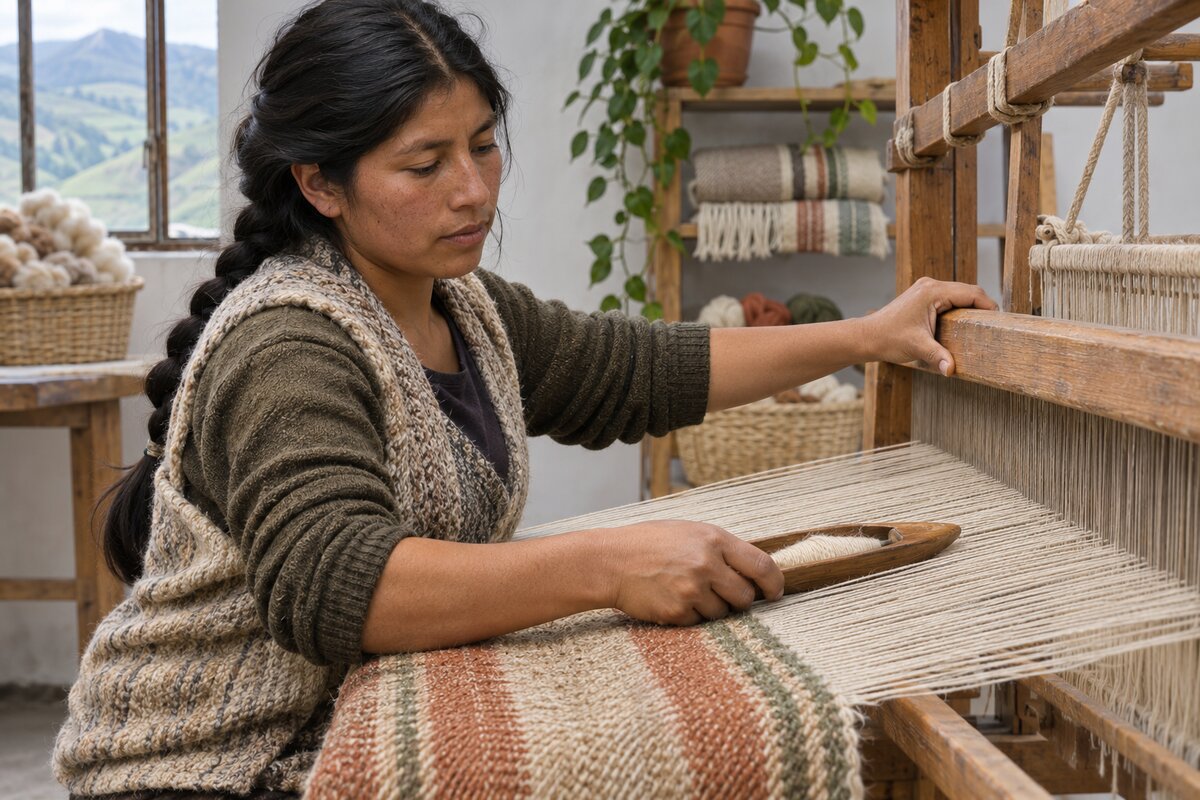 Illustration of loom weaving.
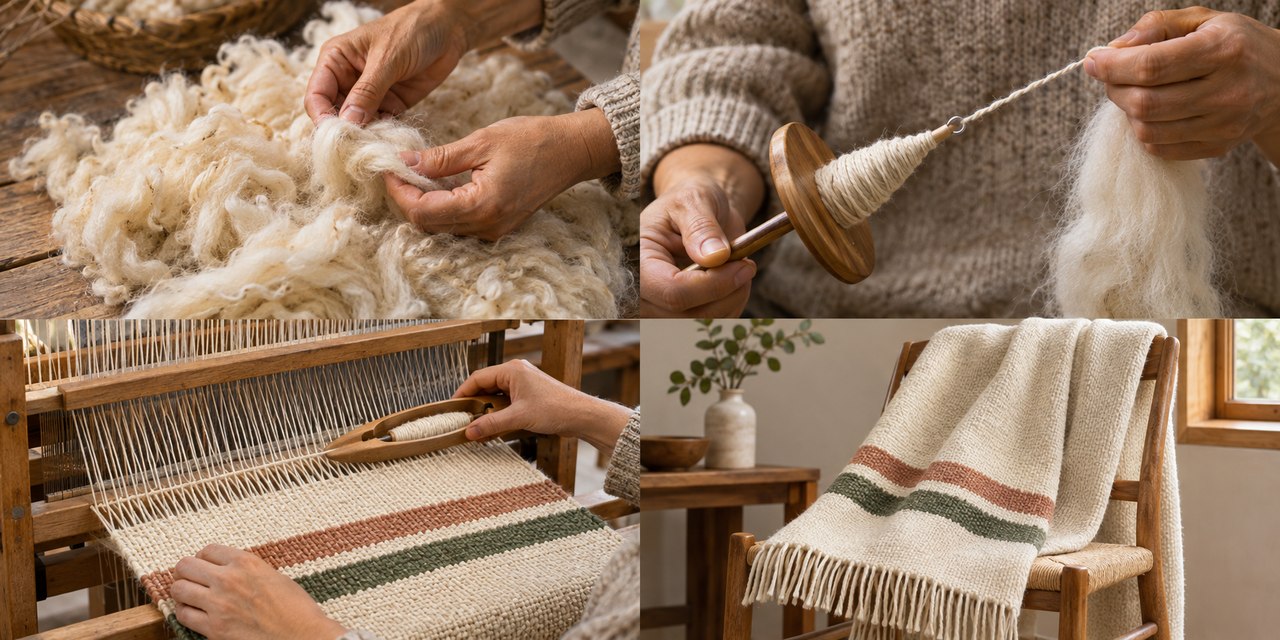 Process illustration. The finished example does not show current stock.
Sort and clean
After shearing, fleece is sorted and cleaned to prepare the fibers.
Card and spin
Carding loosens and aligns the fibers. Spinning twists the prepared fiber into yarn.
Weave and finish
Warp and weft yarns cross on the loom to make fabric. The finished throw may be brushed, trimmed, or fringed.
Fiber content varies by item, but it is usually 80% alpaca and 20% acrylic. Check the individual product label for composition and care.
 Nepal
From wool to a felt ornament
Felt is made from fibers that bind together. Unlike woven or knitted fabric, the basic felt material does not require yarn.
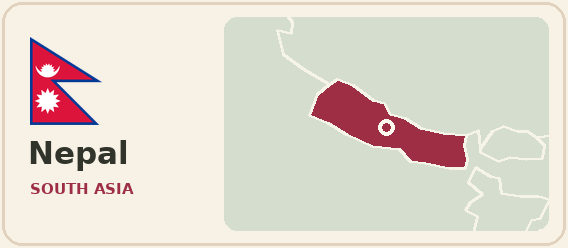 Country locator
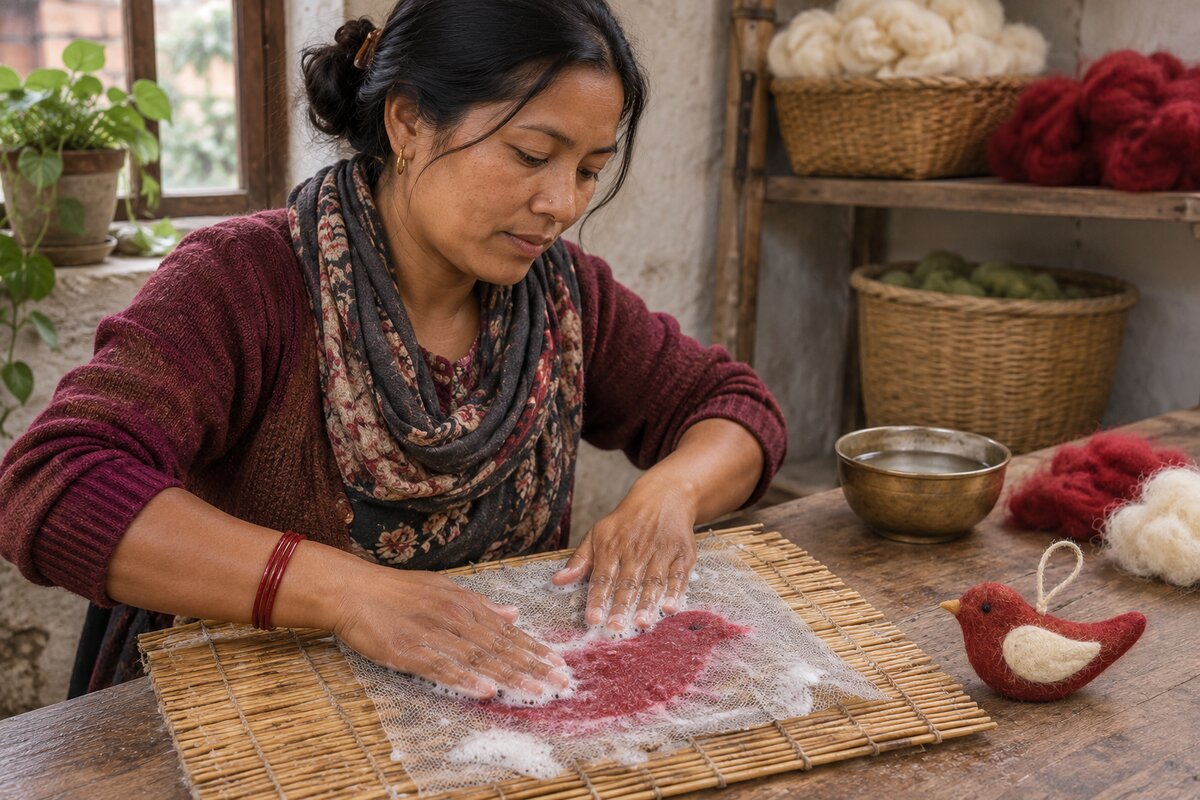 Illustration of wet felting.
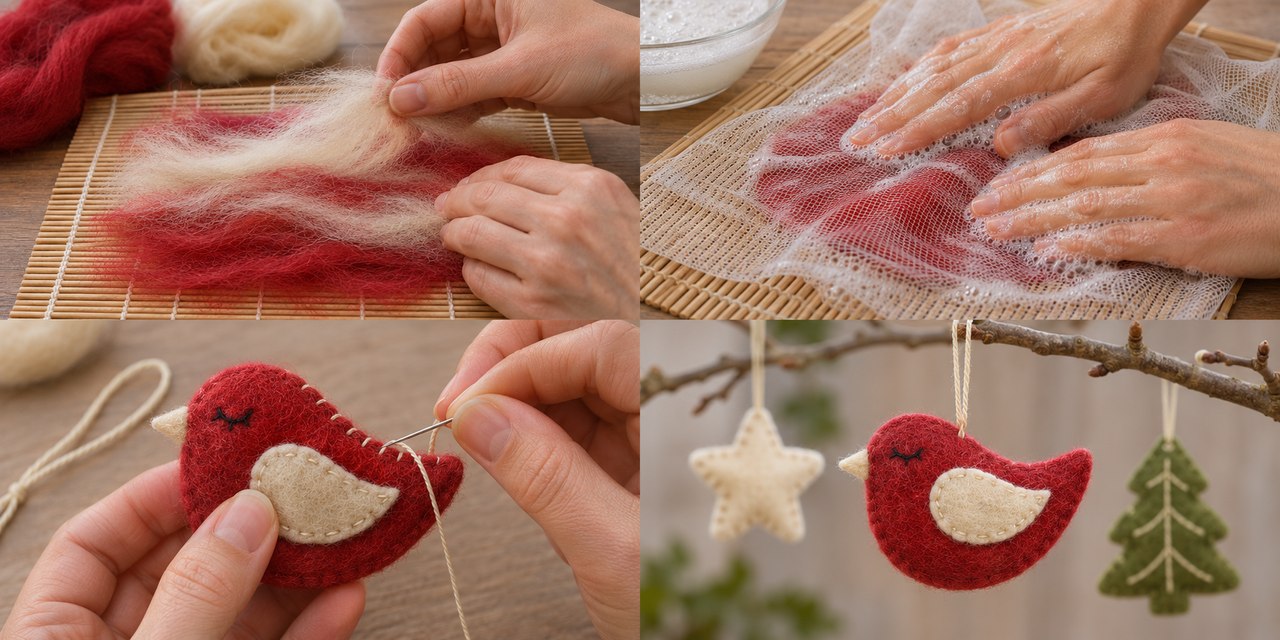 Process illustration. The finished example does not show current stock.
Prepare the wool
Loose wool is cleaned and carded. Makers can layer the fibers and choose colors for the design.
Wet-felt the fibers
Warm water, soap, and repeated rubbing or rolling help the fibers interlock into a denser fabric.
Shape and finish
For a sewn ornament, cut or shaped felt pieces are stitched together. Some makers add needle-felted or embroidered details.
The bird is an illustrative example. Actual methods, shapes, and materials vary by maker and item.